SunTera G3
6.25MWh IEC
6.25MWh IEC
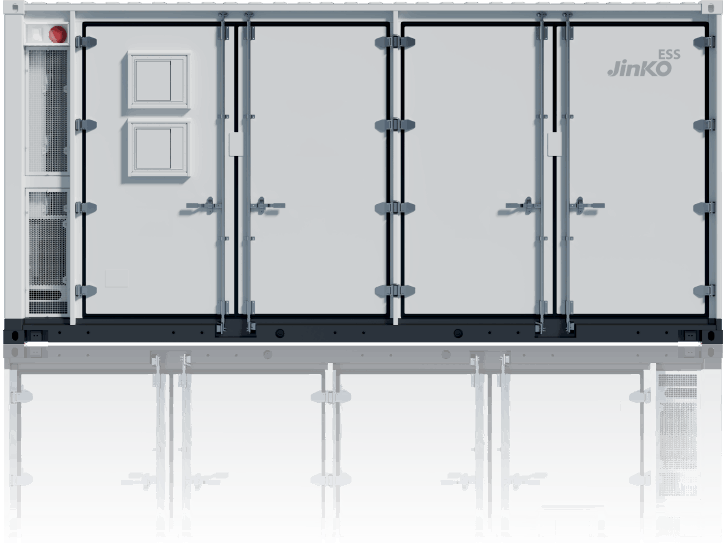
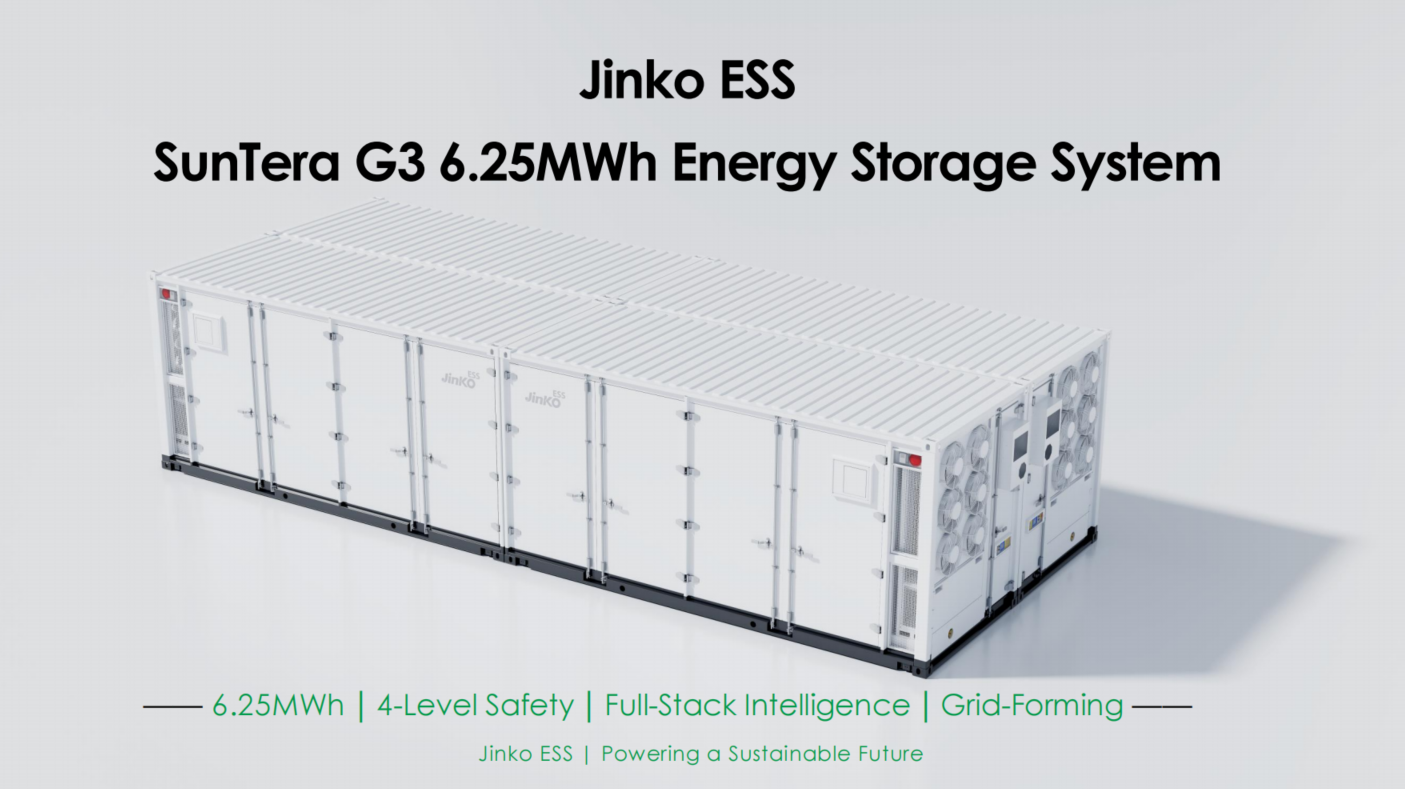
The Jinko ESS 6.25 MWh energy storage system leverages our latest liquid-cooled technology and high-capacity 588 Ah LiFePO4 cells to achieve industry-leading energy density, safety, and efficiency. Engineered for grid-scale applications, it maximizes storage capacity and long-term reliability in a standardized 20-foot container layout.
Key Advantages

Longer Lifespan
Intelligent liquid cooling precisely controls cell temperature, improving consistency and extending system life
LFP + aerogel insulation
Cell Chemistry
UL 9540A
Thermal Propagation
<100 ms
Leakage Detection Response
≤2.5°C
Cell Temperature Differential
- Cell Chemistry: LFP + aerogel insulation
- Thermal Propagation: UL 9540A
- Leakage Detection Response: <100 ms
- Cell Temperature Differential: ≤2.5°C

More Revenue
Advanced system management improves efficiency and usable capacity, increasing customer returns
≥95%
System RTE
≥98.5%
PCS Efficiency
- System RTE: ≥95%
- PCS Efficiency: ≥98.5%

Active cell-to-system protection with hybrid gas and water fire suppression helps prevent thermal runaway and ensure system safety
IP55
IP Rating
UL9540A / IEC62619
/NFPA68 / NFPA69 / NFPA855
/NFPA68 / NFPA69 / NFPA855
Certifications
- IP Rating: IP55
-
Certifications: UL9540A / IEC62619
/NFPA68 / NFPA69 / NFPA855

Effortless Operation
AI-powered control and flexible configuration enable fast commissioning, lower O&M costs, and adaptability for maximum ROI.
>90%
Factory Pre-Commissioning
7–10 days
Grid Connection Time
↓70%
Installation Labor Reduction
↓50%
Commissioning Time Reduction
One-click, station-wide
OTA Upgrade
- Factory Pre-Commissioning: >90%
- Grid Connection Time: 7–10 days
- Installation Labor Reduction: ↓70%
- Commissioning Time Reduction: ↓50%
- OTA Upgrade: One-click, station-wide
Applications
Generation-side
Stabilize and optimize renewable energy output
while supporting grid stability.
while supporting grid stability.
Grid-side
Support grid dispatch for peak shaving and frequency regulation,
improving system flexibility and stability.
improving system flexibility and stability.
User-side
Reduce grid load, meet diverse energy needs,
and improve power supply reliability for end users.
and improve power supply reliability for end users.
Specifications
|
|
|
| Type of cell | Lithium Iron Phosphate(LFP) |
| Cell specification | 587/588Ah |
| Charge/discharge power | 0.5P/0.25P |
| Configuration of system | 1P416S×8 |
| Rated capacity | 6.25 MWh |
| Rated voltage | 1331.2V |
|
|
|
| Dimension(L×W×H) | 6058×2438×2896mm |
| Weight | 48,000kg |
| Cooling method | Liquid Cooling |
| Operating temperature | -40~55℃ |
| Operating humidity | ≤100%RH |
| Altitude | ≤4500m |
| Noise level | ≤80dB(A),@lm/75dB(optional) |
| IP grade | IP55 |
| Corrosion class | C4/(C5 optional) |
| Fire suppression system | Temperature sensor+Smoke detector+Combustible gas detector+ Deflagration venting Optional·+A erosol+Water sprinkler |
| Communication | Ethernet/CAN |
| Certification Standards | IEC62619,IEC61000,IEC62477,UL9540A,UL1973, UL9540,NFPA68,NFPA69,NFPA855 |


Follow us