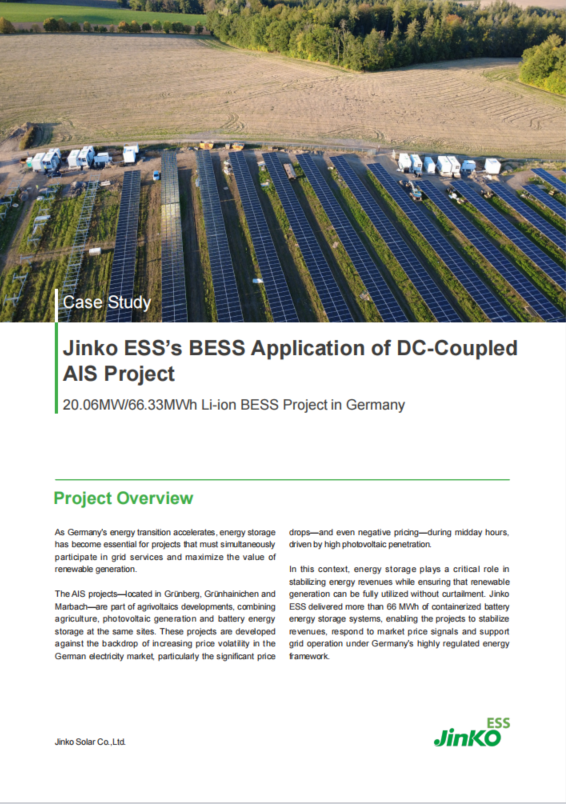
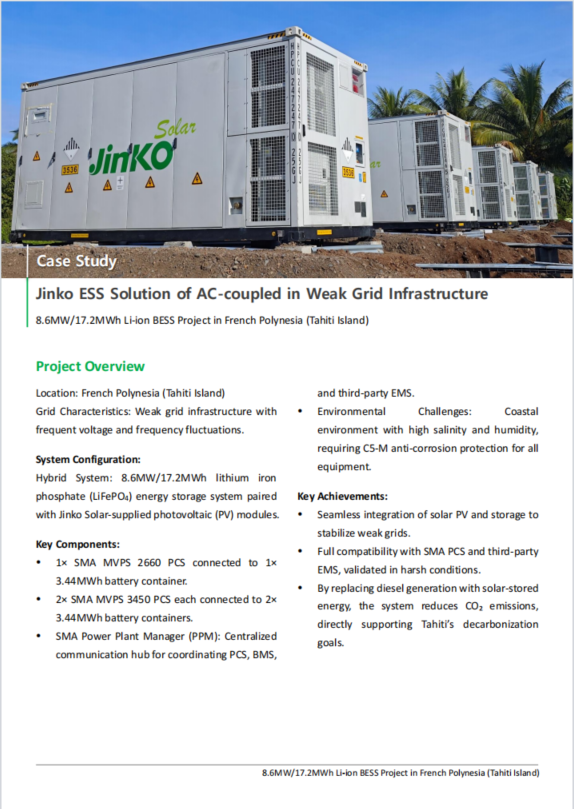
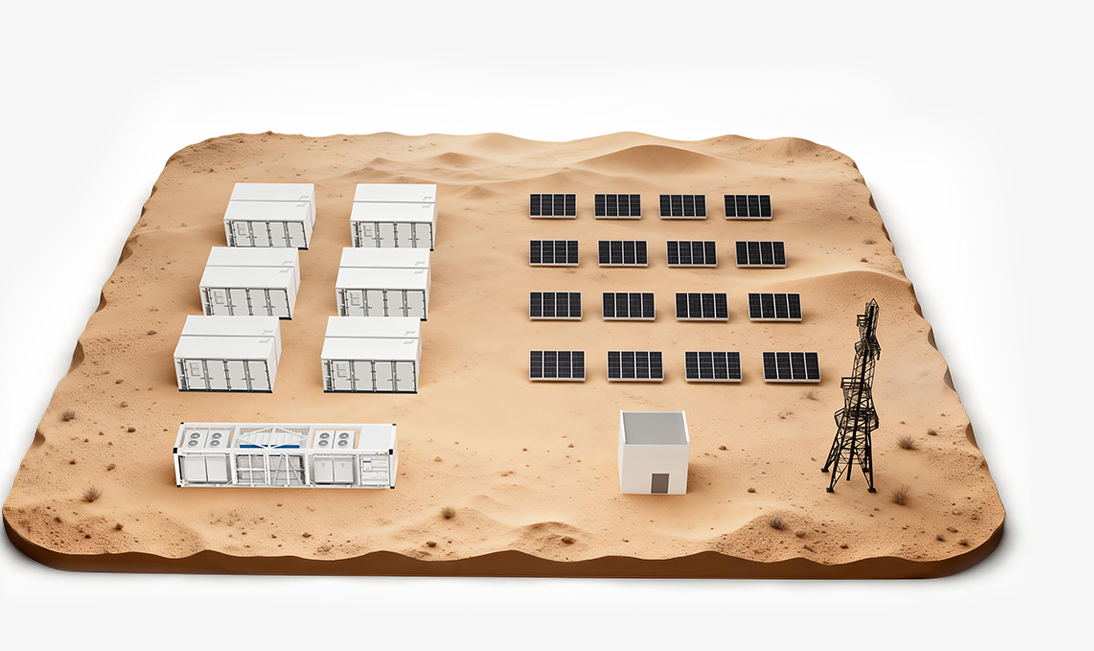
AC- and DC-coupled renewable energy storage architectures with grid-support capabilities
improve renewable energy integration and reduce renewable curtailment.

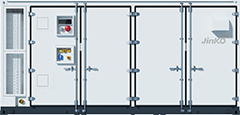
SunTera Series: A 20-foot containerized platform featuring G2 (5.01 MWh) and G3 (6.25 MWh), covering diverse capacity and application needs. G2 focuses on high reliability, while G3 combines high efficiency with increased usable capacity. For renewable energy plants, flexible AC/DC coupling supports both new-build and retrofit projects, enabling energy shifting and output smoothing to reduce renewable curtailment.

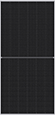
Tiger Neo 3.0: High-efficiency N-type TOPCon bifacial modules delivering 650–670 W front-side power with an 85±5% bifaciality factor and a temperature coefficient as low as -0.26%/°C . Optimized cell architecture and encapsulation enhance low-light performance and resistance to PID, LID and LeTID. Certified for 5,400 Pa front-side load, ensuring stable long-term generation.

Supports a range of AC and DC coupling configurations to suit different site conditions, grid-connection arrangements and retrofit requirements. Both AC- and DC-coupled solutions can support grid-forming applications.

Supports integration with a broad range of PCS and EMS solutions to meet regional grid codes and interconnection requirements, with proven grid-forming PCS options available.

Supports closed-loop active power control, reactive power and power factor control, ramp rate control, frequency stability and voltage control, BESS coordination, and dispatch response, enhancing the operational flexibility, grid support capability, and grid integration performance of renewable energy plants.

SunTera provides short-duration power support of up to 3x for 10 seconds. Combined with proven grid-forming PCS solutions from selected partners, it delivers voltage and frequency support, synthetic inertia and short-duration power support, strengthening system stability in weak grids and networks with high renewable penetration.